
A classroom code of conduct
Will you teach cruelty or justice?
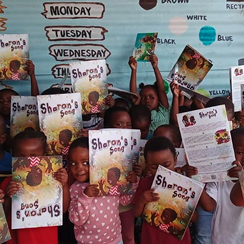
This is a practical article, designed for the STEPi Teaching with Love community. STEPi aims to provide solid tools to help you, in the classroom and in your everyday life, to positively influence those around you. STEPi’s books, like A Boy Named Justice, are tools created for important conversations about Justice. Sharon’s Song helps with discussions about bullying, connection, and how we are together. Other STEPi books help spark discussions about bigotry (Pantone and Adroa’s New Home), inclusion, and the importance of education and values. Through your example, actions, and words, you will be the learner’s teacher. The books are only helpful if you bring them to the child’s attention. More importantly, paraphrasing Freire: “How we are in the world is how our learners will be.” You are the Commander-in-Chief of your classroom culture. Is it a place of justice, love and virtue? That is your choice – NO ONE ELSE’S! A key help for children to use as an internal “mental self-talk” prompt is to use the golden rule (see page seven of Parenting with Love) as a thinking model to use when faced with choices in our lives, or as Freire champions: “How we will be in the world!” Here is a bit from A Boy Named Justice that can be used for a classroom discussion or for the class to write a code of conduct on “how will we be together?”
Justice reminded Vivian of the Golden Rule: to be kind, helpful, and collaborative.
Vivian and Justice then made a list of ideas to remind all students at their school about love, courage, virtues, kindness, respect, communication, and how to solve problems. They named their list the Kindness and Happiness Code of Conduct…
Choose to be happy and kind.
Code of Conduct
By: Vivian and Justice
We choose to be kind to people with our actions.
We choose to say things that are necessary.
We choose to say things that are true.
We choose to say things that are kind.
We choose to find a solution when there is a problem.
We choose to do and say things that keep everyone safe.
We choose to do and say things that keep everyone feeling included, loved, and cared about.
We choose to treat everyone with respect. We treat everyone with respect, even if they are stinky, wear messy clothing, talk funny, are shy, can’t see or hear well, are happy or sad, and are small or big.
We: Don’t hit. Don’t yell. Don’t touch without permission. Don’t take what is not ours. Don’t lie.
We tell people who are hurting someone to stop. We tell a teacher if they don’t stop or we don’t feel safe.
We choose to follow the Golden Rule: We treat others as we would want to be treated. WE talk to others as we would want to be talked to. We listen to others as we would like others to listen to us.
Source: A Boy Named Justice
How we are in the world is how we will “teach”. Kindness or Violence/Cruelty or Virtue are choices learned, encouraged, and nurtured by a child’s environment.
Children are born gentle, loving, and with a desire to connect. Yes, watching young boys throw rocks, break things, or stomp ants seems to undermine this idea, but we all stomp ants and the spider on the floor of the bathroom. Does that mean we are mean? I have met a few in Africa who are vegetarians – the few I have met are that way for religious (mostly raised vegetarian), environmental, or cruelty reasons. The carnivores mostly learned to eat meat without thinking of the cruelty to the environment or the animal sacrificed for their pleasure. We learn from observation and modeling those around us. So we learned that killing animals is ok, just like we learn that hitting, shaming, or belittling a girl, boy, cleaning person, prostitute, mom, or dad is okay. We learn that Justice is situational, based on your status. We learn that “Justice” is not always even, equal for everyone, or practiced as we might think it should be. At universities, the important people are often on the higher floors, so while they speak about inclusion, colonized-infused hierarchies, openness, and transparency, we place the leaders high above the fray of the everyday life of students, with the “leaders” coming down to bless us with their presence at events or spontaneous engagements. We even give them preferred parking. We also see this at street level in schools with the headmaster’s nice office, car, dress, and lifestyle.
If any of the above paragraphs is bothering you, making you a bit angry, or making you say to yourself, “Who is he to judge?” then I have made my point. My point is that our words and actions matter; how we are in the world matters more. Madonna’s song “Nobody’s Perfect” or Jusus’ words “judge not...” is certainly helpful in this context of dealing with the inconsistencies of the world. But this is about you as an individual; How will you choose to be in the world?
Final thought
My dad was a Principal in Northern Michigan. We have well below 0 days throughout the long, snowy winters. My father would stand outside as the school buses dropped off the learners and greeted each one; he did not go to his warm office, drinking coffee as the kids came- he showed them that they were important. He showed the teachers and parents that his learners were important. He knew all of their names. Dad died many years ago, but I still have his grey-haired adults coming up to me and telling me about my dad. What will your students tell about you when they are grown? Maybe it will be about the Justice/classroom culture/poster you made together with input from each learner in your class. (Not a list dictated and imposed by a teacher, but constructed with respect while teaching democracy and inclusion, with the wise guidance of the teacher).