
Culture Dictates Destiny | Victimhood to Virtue
Written by Paul H. Sutherland (Founder of STEPi & Honorary Education Professor at Nelson Mandela University)
Culture is not race. It is not skin colour, religion, gender, or nationality. Culture is how we choose to be. It is expressed in the values we reward, the behaviours we tolerate, and the stories we tell ourselves about who we are and what is possible.
It is shaped by how we understand love and compassion, by who we include in our moral circle, who we call our friends, who we “Choose” to like or not, and by whether we believe responsibility belongs to “someone else” or to each of us. In other words, we choose how we are in the world.
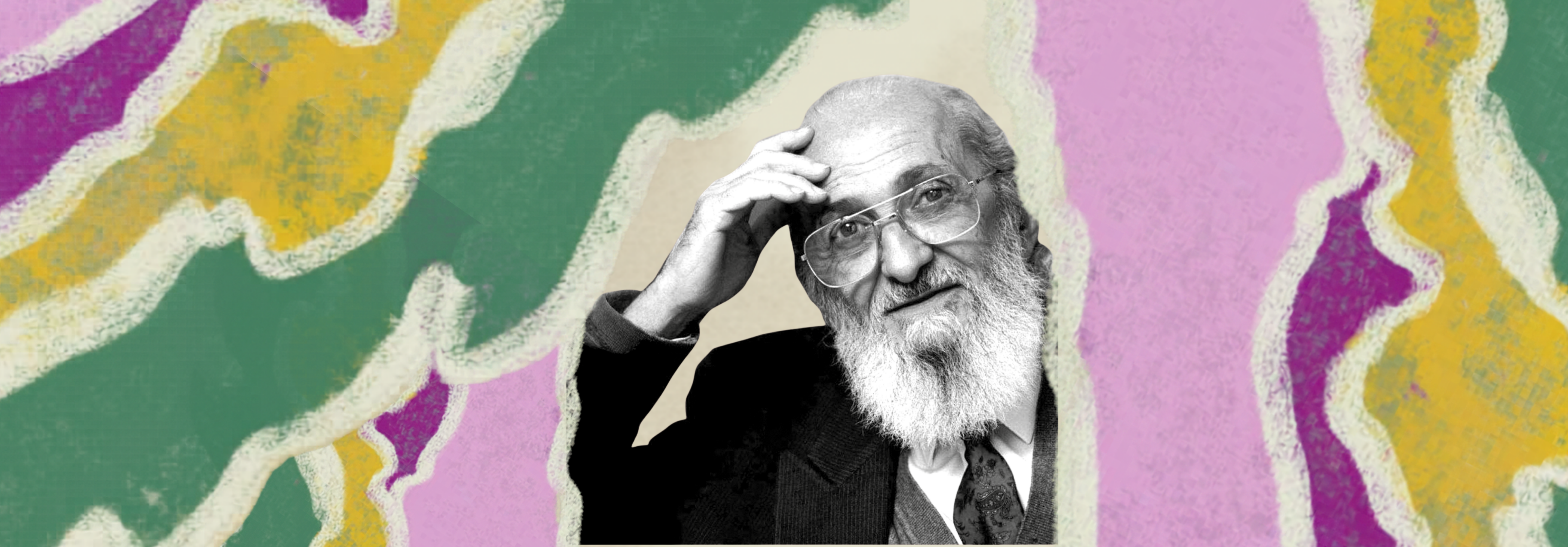
As teachers, we must often reflect on Freire’s words about teaching children to be “in the world and of the world.” How do we wish our students to be in the world? This is why social breakdown cannot be explained by identity alone.

Violence, corruption, rape, selfishness, envy, and injustice are not caused by identity. They are learned behaviours. They are caused by patterns of behaviour and belief that become normalised. What becomes normalised is always taught — implicitly or explicitly — through culture and education. STEPi teaches educators and parents alike about the significance of these moments. We call these moments, "Micro Moments of Influence" whereby each interaction one has with a child will have an impact on their development. Teachers can thus exhibit a "different" culture in their classrooms based on how the learning environment is constructed and by how they behave within this space.
The Limits of Blame-Based Explanations
The decolonisation movement has made an important historical contribution. It challenged false narratives, exposed real harms of colonial rule, and insisted that history matters. That work was necessary. But in many contemporary classrooms, especially in education faculties, decolonisation has quietly shifted from historical analysis to a psychology of blame.
Complex social problems including education systemic failure are increasingly explained almost entirely as the fault of colonialism, the English language, France, or “the West.” The blame is often centered on how these colonialist hierarchical, bigoted, corrupt influences are justified as behaviours of corruption, racism among African leaders. While these explanations can describe past injustices, they often fail to explain present realities — or future aspirations that African leaders were previously fighting for.
As Teachers we perpetuate injustice by not calling it out and showing why the golden rule and other virtue-based “ways of being” should be championed. The opposite of love is not hate, it is indifference-it is apathy.
If colonialism alone determined outcomes, then countries with similar colonial histories would display similar trajectories. Yet this is clearly not the case. The United States, Australia, Hong Kong, and Singapore were all shaped by British colonialism, yet they did not collapse into permanent dysfunction.
History influences societies — but it does not dictate destiny. Culture does.
Leadership Shapes Culture, Not Skin Colour
Authoritarianism, corruption, and cruelty are not racial traits. They are human values. Uganda’s ruthless dictator, Yoweri Museveni, King Mswati 111, Congo’s Denis Sassou Nguesso, Zimbabwe Mnangagwa govern through patterns of control, repression, and patronage strikingly similar to those employed by Donald Trump, Benjamin Netanyahu, Xi Jinping, and Vladimir Putin — despite vast differences in race, religion, geography, and history.
Likewise, the moral leadership of Ellen Johnson Sirleaf, Nelson Mandela, Harriet Tubman, or Mahatma Gandhi did not arise from identity, but from character, discipline, and ethical choice. Oppression does not become ethical simply because those in power hold it.
Power reveals values — it does not create them.
Victimhood as a Cultural Trap
One of the most dangerous legacies of grievance-based narratives is that they encourage victimhood as an identity rather than injustice as a problem to be solved.
Developmental psychologist Don Beck, who worked extensively in South Africa during and after apartheid and consulted with Mandela and Desmond Tutu, warned repeatedly: “Until an individual, group, or society moves beyond victimhood, it cannot make progress.” Victimhood and blame do not build schools, reduce violence and poverty or form ethical citizens.
It is crucial that educators teach children that they are in control of their own choices. The science of the importance of this is that a child is feeling like they belong, and that their life has meaning and value in the world that comes from feeling “In control” and that they affect the environment (Locus of control). A persistent external locus of control — the belief that outcomes are determined primarily by outside forces — correlates with reduced agency, lower persistence, weaker problem-solving, apathy, addiction, and higher tolerance of violence, injustice, and corruption. In other words, victimhood and blame can feel morally and emotionally satisfying or be ignored due to feeling like they have no control over their lives and their world.
For more, access Rotter, J. (1966). "Generalized expectancies for internal versus external control of reinforcement".
What the Great Educators Actually Taught
This is where education matters most.
Paulo Freire is often invoked to justify grievance-based pedagogy, but this is a serious misreading of his work. Freire did not teach blame or call people to play victims. He taught conscientisation — critical awareness paired with responsibility and action.
Freire warned that liberation without ethical responsibility simply recreates domination in new forms. True liberation, for him, required conversions, communication, dialogue, reflection, courage, and moral accountability, moving towards the goal of creating ethical, virtuous citizens who felt empowered to influence the world.
Maria Montessori understood culture not as ideology, or a way to justify “what is” but as habits. Children absorb how adults communicate about and handle conflict, justice, effort, truth, relationships, and “how to be in the world” long before they absorb language. Education, in her view, was the slow formation of character through order, respect, and purposeful work—not indulgence, enabling, laziness or excuse-making. As Poet Maya Angelou's grandma told her, “Tired ain’t lazy - get to work.”
Steve Biko warned against internalised oppression, but he did not advocate dependency. Black Consciousness was not about waiting for justice; it was about building self-worth, competence, and confidence. Biko understood that people who see themselves only as victims cannot lead.
Mandela, finally, understood injustice intimately — and refused to build a nation on resentment. He chose self-restraint, forgiveness, responsibility, and long-term thinking, knowing that a culture of grievance would ultimately destroy democracy from within.
What Should We Educate Children Toward?
If social problems are cultural, then education must be intentionally formative.
At STEPi, we argue that education must cultivate agency rather than excuse-making, character rather than entitlement, effort rather than blame, empathy rather than tribalism, optimism rather than despair, and responsibility rather than dependency.
This does not deny history. It refuses to be imprisoned by it.
Teachers shape culture more powerfully than politicians ever will. Every day, educators model how conflict is handled, whether effort matters, whether truth is spoken, and whether love and discipline can coexist.
(S quaring The Education Pyramid institute) teaches educators in Teaching with Love Seminars. We do not teach values by talking about them — We teach values and influence culture by how we live.
Culture Is a Choice, Renewed Daily
Every society must decide what it will teach its children.
Will we educate them to believe that history explains everything — or that responsibility shapes the future? Will we train them in compliance or competence, blame or problem-solving, victimhood or virtue, pessimism or optimism, indifference or love?
Social issues are not solved by changing who we accuse. They are solved by teachers, adults, and parents changing how we choose to be. We teach by example.
Education remains the most powerful tool we have to end suffering, cause happiness, and have a world that works for everyone.
References
- Selected References
- Beck, D. & Cowan, C. Spiral Dynamics
- Freire, P. (1970). Pedagogy of the Oppressed
- Montessori, M. (1949). The Absorbent Mind
- Biko, S. (1978). I Write What I Like
- Mandela, N. (1994). Long Walk to Freedom
- Sen, A. (1999). Development as Freedom
- Rotter, J. (1966). “Generalized expectancies for internal versus external control of reinforcement”
- Haidt, J. (2012). The Righteous Mind
Please Note: The views expressed in this article are those of the author, Paul H. Sutherland.



%0ACulture%20is%20not%20race.%20It%20is%20not%20skin%20colour,%20religion,%20gender,%20or%20nationality.%20Cultur...)